QJEEM25Ch6800: JEE Main 2025 Chemistry - Class 12 JEEM25Ch6800 Solution: Following are the four molecules "P", "Q", "R" and "S". Which…
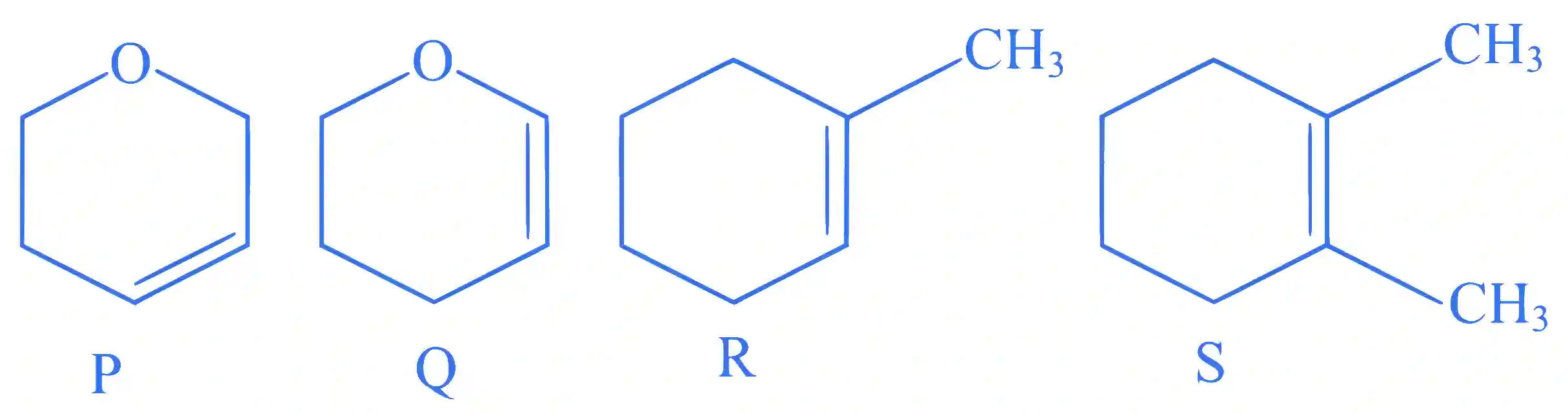
Following are the four molecules "P", "Q", "R" and "S".
Which one among the four molecules will react with at the fastest rate?
Multiple Choice Options
- A Q
- B S
- C P
- D R
Step-by-Step Verified Solution
Addition of to an alkene proceeds via an electrophilic addition mechanism. The rate-determining step is the protonation of the double bond, leading to formation of a carbocation intermediate. Hence, the rate of reaction depends on the stability of the carbocation formed.
In compounds R and S, protonation of the alkene leads to secondary and tertiary carbocations respectively, which are stabilized only by the effect and hyperconjugation of alkyl groups. Although S forms a tertiary carbocation, this stabilization is limited to inductive effects.
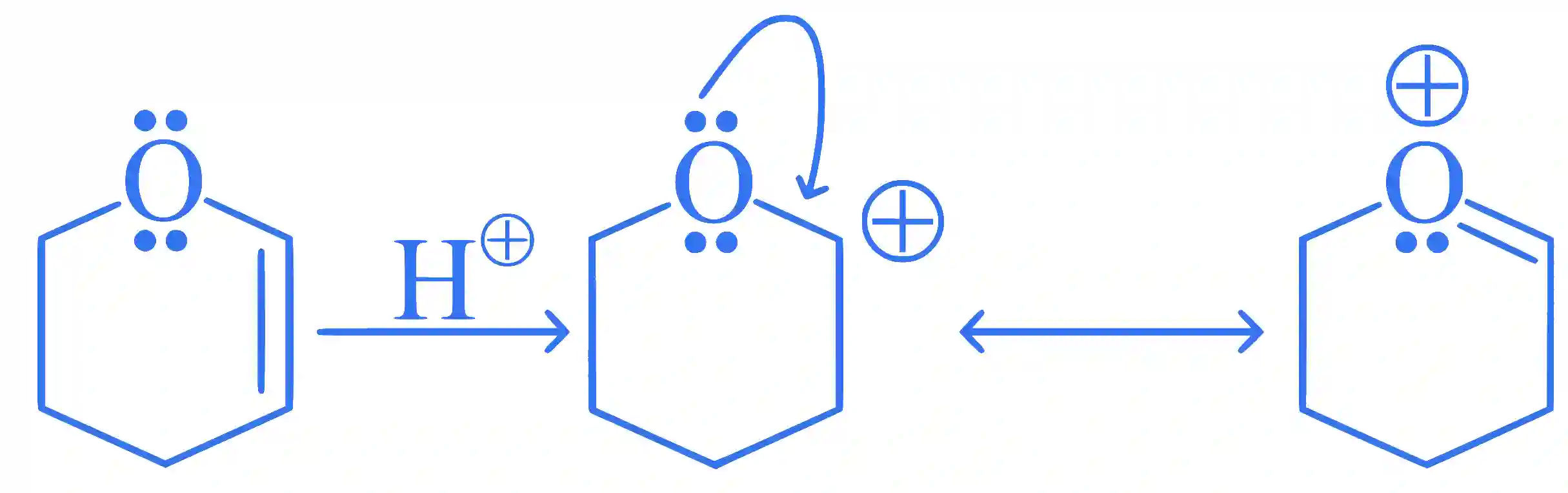
In compound Q, the double bond is adjacent to an oxygen atom. Upon protonation, the resulting carbocation is resonance stabilized by donation of a lone pair from oxygen, forming an oxocarbenium ion. This resonance delocalization of positive charge provides significantly greater stabilization than hyperconjugation or alkyl effects.
Since resonance stabilization is stronger than alkyl substitution effects, the carbocation formed from Q is the most stable. Therefore, compound Q reacts with at the fastest rate.