Verified Solution • 2025–26 Session
moderate
QJEEM09Chf33c: JEE Main 2009 Chemistry - Class 11 JEEM09Chf33c Solution: In which of the following arrangements, the sequence is not…
In which of the following arrangements, the sequence is not strictly according to the property written against it
Multiple Choice Options
- A CO2 < SiO2 < SnO2 < PbO2 : increasing oxidising power
- B HF < HCl < HBr, HI : increasing acid strength
- C NH3 < PH3 < AsH3 < SbH3 : increasing basic strength
- D B < C < O < N : increasing first ionization enthalpy
Step-by-Step Verified Solution
Option A is true.
Here in oxidation number of is due to inert pair effect the oxidation number is not stable for , So, to become stable oxide will oxidize other and reduced to So, has the highest oxidizing power.
Option B is true.
Bond length from top to bottom in periodic table increases, So the bond length order is HI > HBr > HCl > HF
The compound which can give ion easily that compound has higher acidic strength.
As the bond length between and in is longest then it will be carier to break the bond between and . So will have highest acidic strength.
Option C is false.
The structure of those molecules are
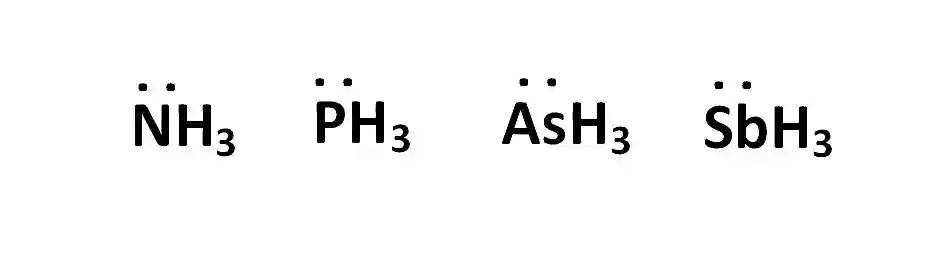
Due to the lone pair electron all of them are basic nature. The molecule which can easily donate the lone pair electron will have more basic strength.
Here, Nitrogen (N) is a element of nd period so in new electron is added in the second period and as size of is small so electron density is more on the outer shell, so electron become unstable due to repulsion with each other. That is why electron pair is easily removable from
On the other hand is a rd block, As is a th block and is a th block elements. So, their size is bigger. So, electron density on the outer shell is less and their repulsion also decreases. So, outer shell electrons are more stable and and will have less ability to donate the electron.
So the correct order is Sb{H_3} < As{H_3} < P{H_3} < N{H_3}
(D) Option (D) is true
Electronic configuration of
In general in periodic table from left to right effective nuclear change increase and it becomes more difficult to remove electron from an atom. That is why ionization enthalpy increases.
But for those atoms which has half filled or full filled outer most shell, those atoms will be more stable and more energy is needed to remove electron from those atoms. Here has stable half filled subshell so it is more stable than
So, correct order is B < C < O < N
Here in oxidation number of is due to inert pair effect the oxidation number is not stable for , So, to become stable oxide will oxidize other and reduced to So, has the highest oxidizing power.
Option B is true.
Bond length from top to bottom in periodic table increases, So the bond length order is HI > HBr > HCl > HF
The compound which can give ion easily that compound has higher acidic strength.
As the bond length between and in is longest then it will be carier to break the bond between and . So will have highest acidic strength.
Option C is false.
The structure of those molecules are
Due to the lone pair electron all of them are basic nature. The molecule which can easily donate the lone pair electron will have more basic strength.
Here, Nitrogen (N) is a element of nd period so in new electron is added in the second period and as size of is small so electron density is more on the outer shell, so electron become unstable due to repulsion with each other. That is why electron pair is easily removable from
On the other hand is a rd block, As is a th block and is a th block elements. So, their size is bigger. So, electron density on the outer shell is less and their repulsion also decreases. So, outer shell electrons are more stable and and will have less ability to donate the electron.
So the correct order is Sb{H_3} < As{H_3} < P{H_3} < N{H_3}
(D) Option (D) is true
Electronic configuration of
In general in periodic table from left to right effective nuclear change increase and it becomes more difficult to remove electron from an atom. That is why ionization enthalpy increases.
But for those atoms which has half filled or full filled outer most shell, those atoms will be more stable and more energy is needed to remove electron from those atoms. Here has stable half filled subshell so it is more stable than
So, correct order is B < C < O < N