Verified Solution • 2025–26 Session moderate

QJEEAdv22Che2d4: JEE Advanced 2022 Chemistry - Class 12 JEEAdv22Che2d4 Solution: Match the rate expressions in LIST-I for the decomposition of…

Match the rate expressions in LIST-I for the decomposition of XX with the corresponding profiles provided in LIST-II. XsX_{\mathrm{s}} and k\mathrm{k} are constants having appropriate units.

List-I List-II
(I) rate =k[X]Xs+[X]=\frac{\mathrm{k}[\mathrm{X}]}{\mathrm{X}_{\mathrm{s}}+[\mathrm{X}]}

under all possible initial concentrations of X\mathrm{X}
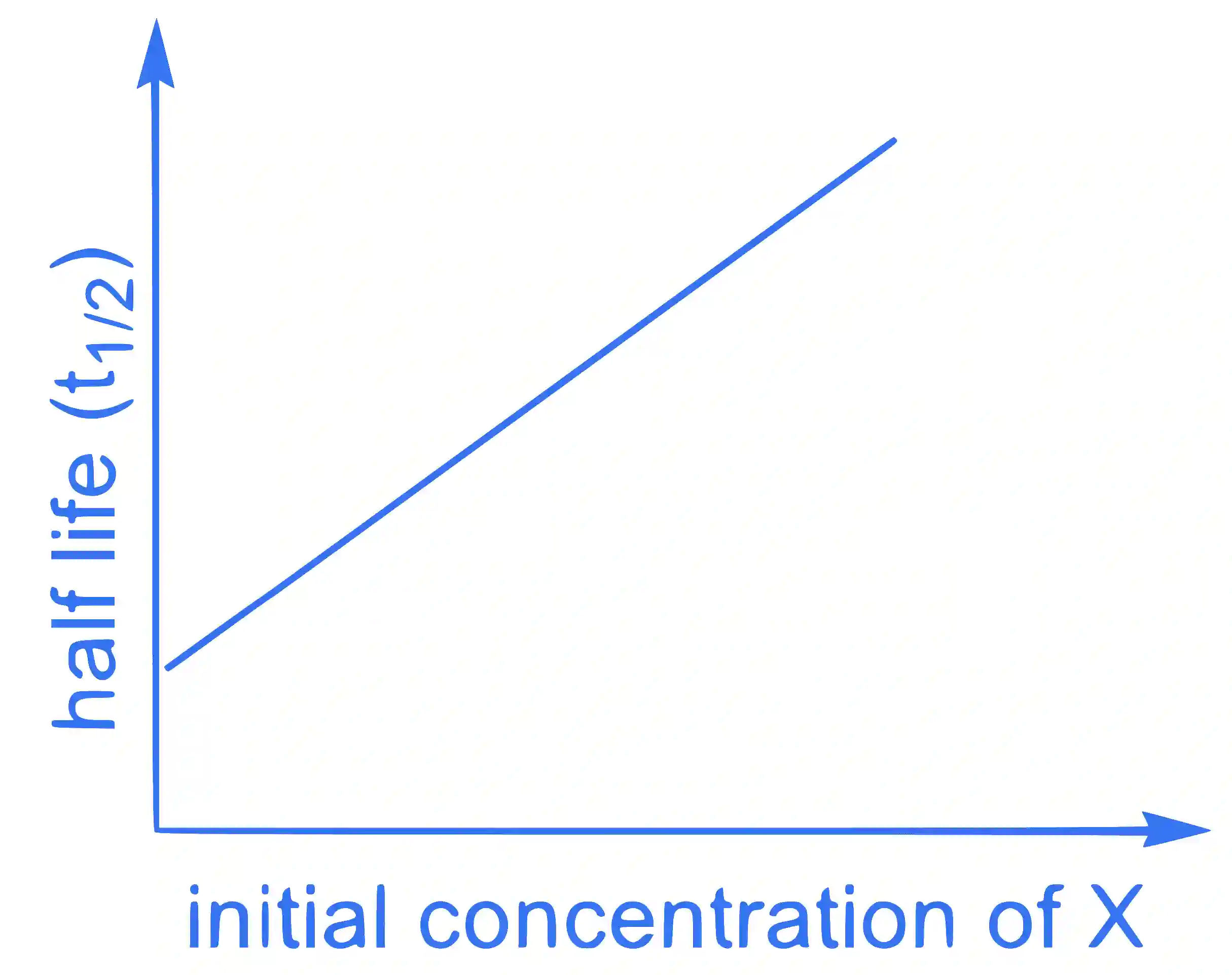
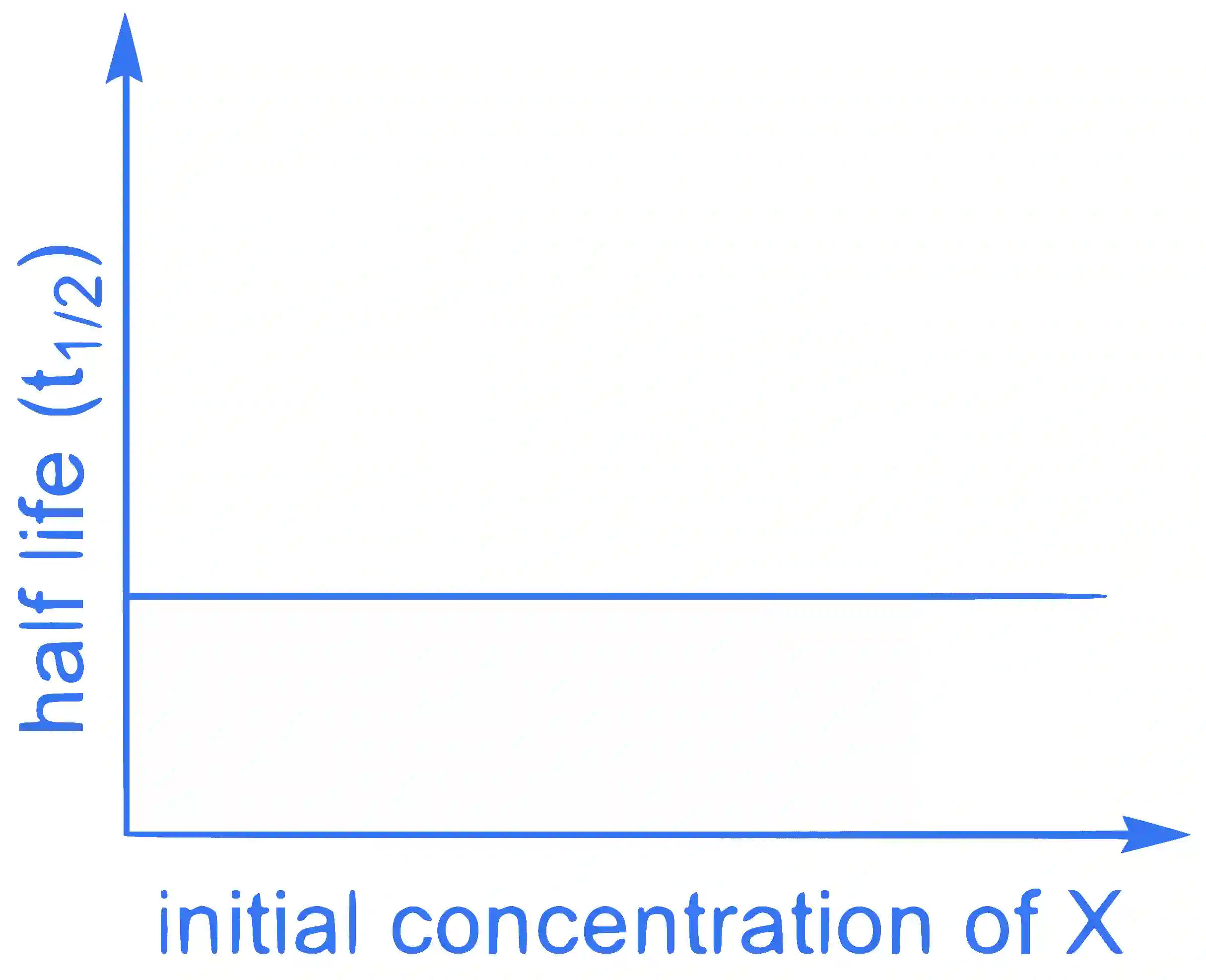
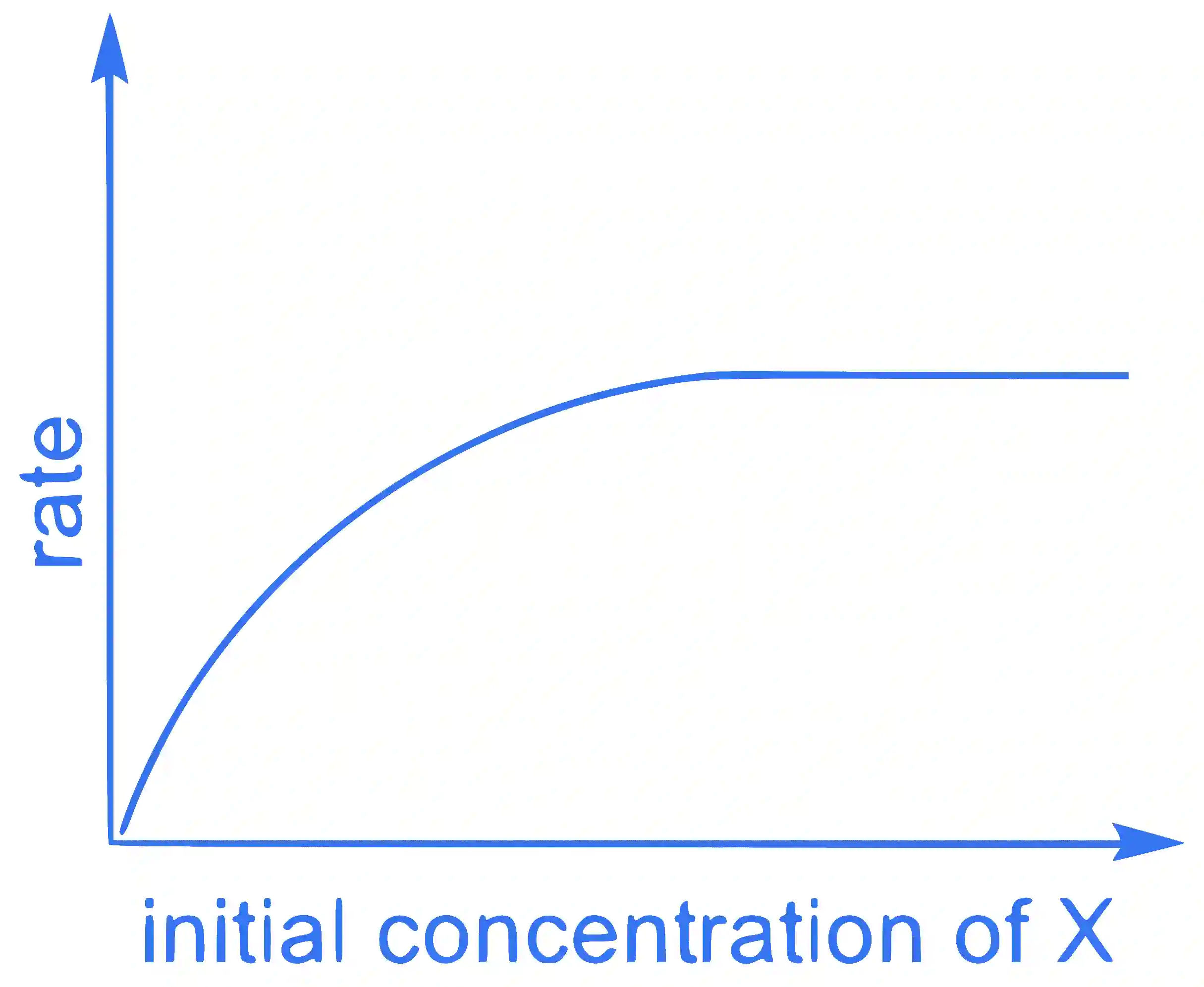
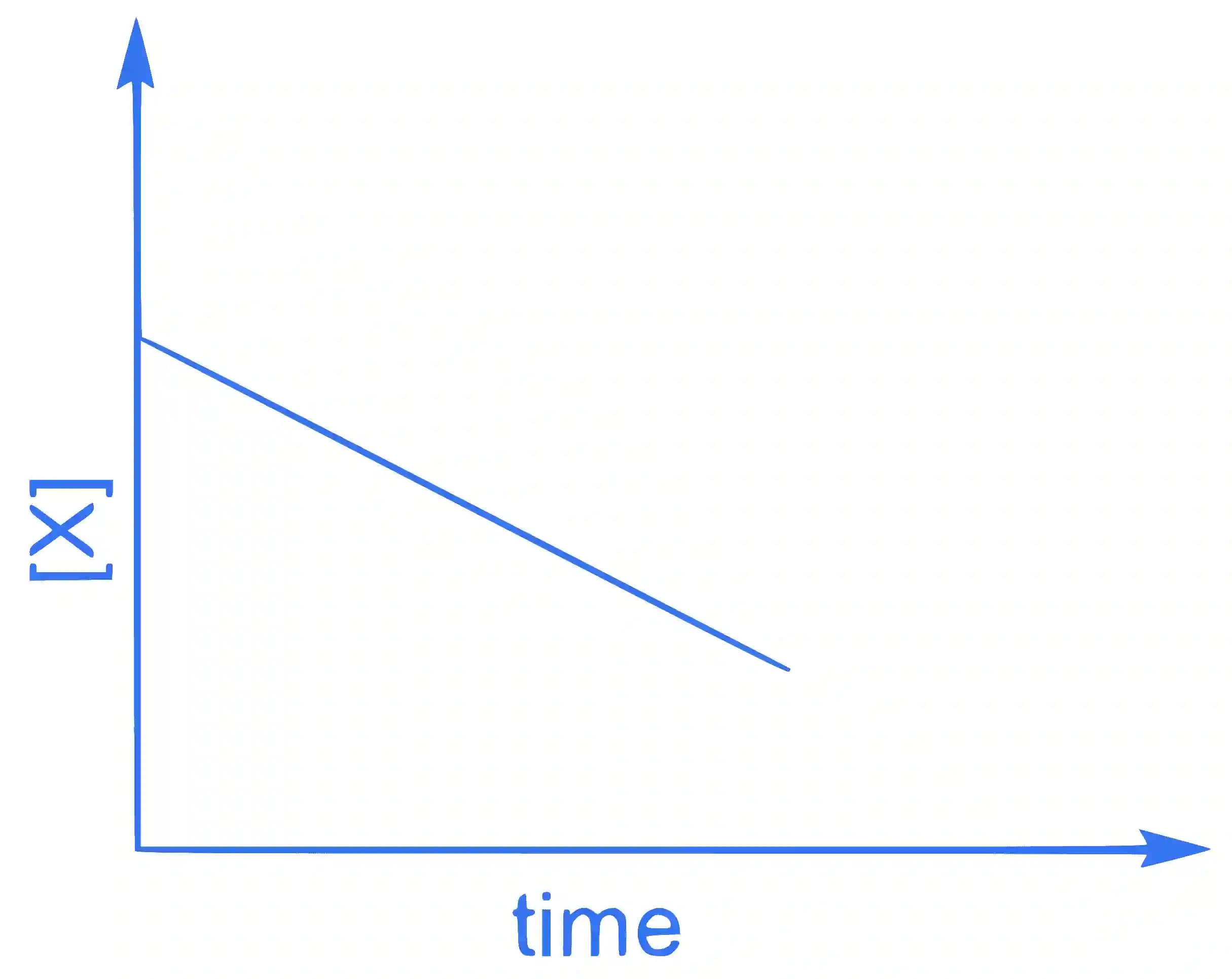
(P) JEE Advanced 2022 Paper 1 Online Chemistry - Chemical Kinetics and Nuclear Chemistry Question 7 English 1
(II) rate =k[X]Xs+[X]=\frac{k[X]}{X_{s}+[X]}

where initial concentrations of XX are much less than XsX_{s}
(Q) JEE Advanced 2022 Paper 1 Online Chemistry - Chemical Kinetics and Nuclear Chemistry Question 7 English 2
(III) rate =k[X]Xs+[X]=\frac{k[X]}{X_{s}+[X]}

where initial concentrations of X\mathrm{X} are much higher than XsX_{s}
(R) JEE Advanced 2022 Paper 1 Online Chemistry - Chemical Kinetics and Nuclear Chemistry Question 7 English 3
(IV) rate =k[X]2Xs+[X]=\frac{k[X]^{2}}{X_{s}+[X]}

where initial concentration of XX is

much higher than Xs\mathrm{X}_{\mathrm{s}}
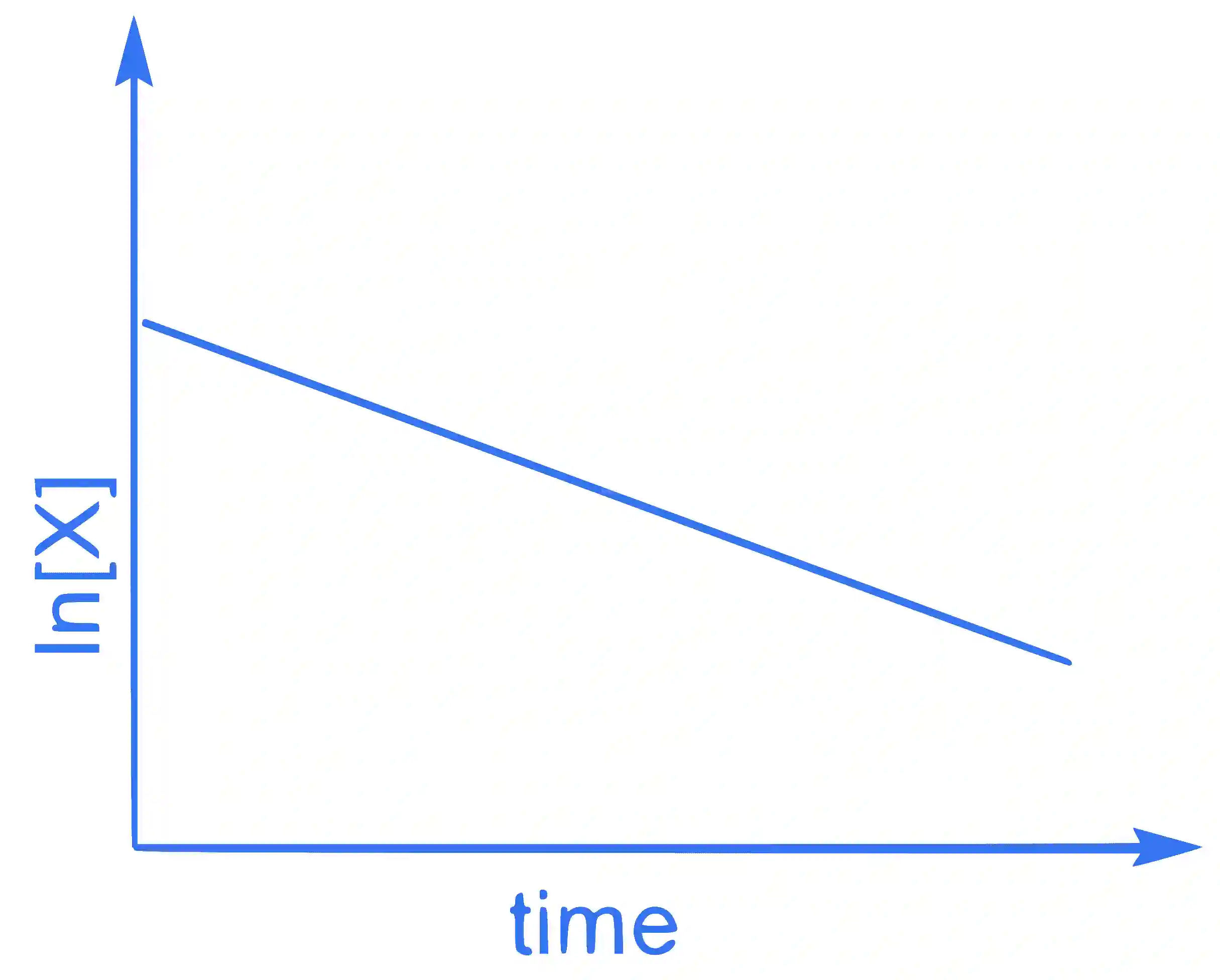
(S) JEE Advanced 2022 Paper 1 Online Chemistry - Chemical Kinetics and Nuclear Chemistry Question 7 English 4
(T) JEE Advanced 2022 Paper 1 Online Chemistry - Chemical Kinetics and Nuclear Chemistry Question 7 English 5

Multiple Choice Options

  • A I→P\mathrm{I} \rightarrow \mathrm{P} ; II →\rightarrow Q; III →S\rightarrow \mathrm{S} ; IV →T\rightarrow \mathrm{T}
  • B I→R\mathrm{I} \rightarrow \mathrm{R} ; II →S\rightarrow \mathrm{S} ; III →S\rightarrow \mathrm{S} ; IV →T\rightarrow \mathrm{T}
  • C I→P\mathrm{I} \rightarrow \mathrm{P} ; II →\rightarrow Q; III →\rightarrow Q; IV →\rightarrow R
  • D I→R\mathrm{I} \rightarrow \mathrm{R} ; II →S\rightarrow \mathrm{S} ; III →\rightarrow Q; IV →R\rightarrow \mathrm{R}

Step-by-Step Verified Solution

rate = k[x]Xs+[X]\frac{k[x]}{X_s+[X]}

Case-1 : [X] > > {X_s};[X] + {X_s} \approx [X]

rate =k[X][X]=k= {{k[X]} \over {[X]}} = k (Zero order w.r.t. X)

I →\to P, S

Case 2 : [X] < < {X_s};[X] + {X_s} \approx {X_s}

∴\therefore rate =k[X]Xs=k′[X]= {{k[X]} \over {{X_s}}} = k'[X] (1st order w.r.t. X)

∴\therefore I →\to Q, T

Case-3 : [X]≈Xs[X] \approx {X_s}

rate =k[X]Xs+[X]= {{k[X]} \over {{X_s} + [X]}}

In this case curve-R given in List-II will match.

∴\therefore I →\to P, Q, R, S, T (The graph of half-life should start from origin)

(II) rate =k[X]Xs+[X]= {{k[X]} \over {{X_s} + [X]}}

∵\because [X] < < {X_s}

∴\therefore Xs+[X]≈Xs{X_s} + [X] \approx {X_s}

∴\therefore Rate =k[X]Xs=k′[X]= {{k[X]} \over {{X_s}}} = k'[X] (1st order w.r.t. X)

∴\therefore II →\to Q, T

(III) rate =k[X]Xs+[X]= {{k[X]} \over {{X_s} + [X]}}

∵\because [X] > > {X_s}

∴\therefore Xs+[X]≈[X]{X_s} + [X] \approx [X]

∴\therefore rate =k[X][X]=k= {{k[X]} \over {[X]}} = k (Zero order w.r.t. X)

∴\therefore III →\to P, S

(IV) rate =k[X]2Xs+[X]= {{k{{[X]}^2}} \over {{X_s} + [X]}}

∵\because [X] > > {X_s}

∴\therefore Xs+[X]≈[X]{X_s} + [X] \approx [X]

∴\therefore rate =k[X]2[X]=k[X]= {{k{{[X]}^2}} \over {[X]}} = k[X] (1st order w.r.t. X)

∴\therefore IV →\to Q, T

Related Learning Resources & Exam Preparation