Verified Solution • 2025–26 Session
moderate
QJEEAdv18Ch8216: JEE Advanced 2018 Chemistry - Class 12 JEEAdv18Ch8216 Solution: Match each set of hybrid orbitals from LIST - A with…
Match each set of hybrid orbitals from LIST - A with complex(es) given in LIST - B
The correct option is
| List - A | List - B | |||
|---|---|---|---|---|
| P. | dsp2 | 1. | [FeF6]4- | |
| Q. | sp3 | 2. | [Ti(H2O)3Cl3] | |
| R. | sp3d2 | 3. | [Cr(NH3)6]3+ | |
| S. | d2sp3 | 4. | [FeCl4]2- | |
| 5. | Ni(CO)4 | |||
| 6. | [Ni(CN)4]2- |
The correct option is
Multiple Choice Options
- A P−5;Q−4,6;R−2,3;S−1
- B P−5,6;Q−4;R−3;S−1,2
- C P−6;Q−4,5;R−1;S−2,3
- D P−4,6;Q−5,6;R−1,2;S−3
Step-by-Step Verified Solution
1.
(A) Let oxidation state of iron (Fe) in

Electron is orbitals remains unpaired as fluorine is weak ligand. One , three and two orbitals undergo hybridisation to form six hybrid orbital each of which accumulate a pair of electron from fluorine.

2. : The arrangement of electrons in will be

Electron in orbitals remains unpaired as water and chlorine is a weak ligands. Two , one and three orbitals undergo hybridisation to form six hybrid orbitals. These orbitals accept lone pair of electrons from each of the chlorine and water molecules.
3. : The arrangement of electrons in will be

Electrons in orbitals remains paired as ammonia is a strong ligand. Two , one and three orbitals undergo hybridisation to form six hybrid orbitals. These orbitals accept lone pair of electrons from each of the six ammonia molecules.
4.

Electrons in orbitals remains unpaired as chlorine is a weak ligand. One and three orbitals undergo hybridization to form four hybrid orbitals. These hybrid orbitals accept lone pair of electrons from each of the chlorine ligand.
5. : The arrangement of electrons in will be

Electrons in orbitals remains paired and paired electron from orbital move to as carbonyl is a strong ligand. One , and three orbitals undergo hybridisation to form four hybrid orbitals. These hybrid orbitals accept lone pairs from each of the four carbonyl ligand.
6. The arrangement of electrons in will be

Electrons in orbitals pair up as cyanide is a strong ligand. One , one and two orbitals undergo hybridisation to form four hybrid orbitals. The hybrid orbitals accept lone pair of electrons from each of the cyanide ligand.
(A) Let oxidation state of iron (Fe) in

Electron is orbitals remains unpaired as fluorine is weak ligand. One , three and two orbitals undergo hybridisation to form six hybrid orbital each of which accumulate a pair of electron from fluorine.

2. : The arrangement of electrons in will be
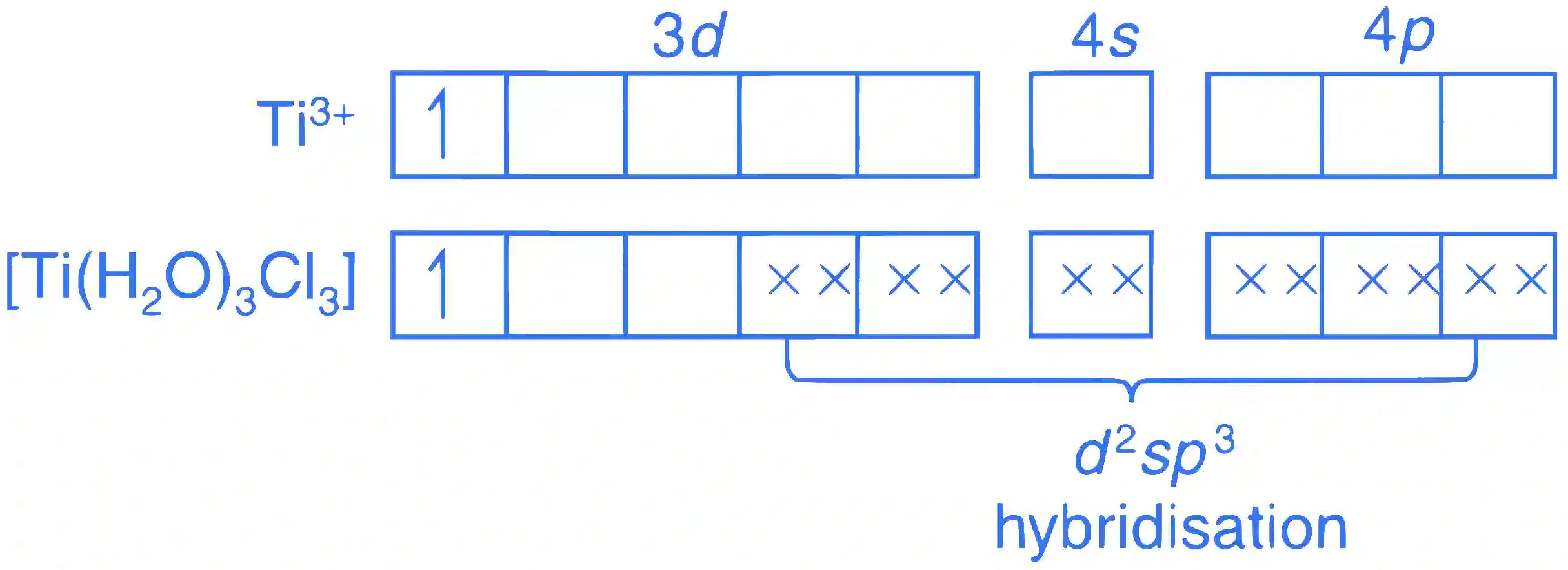
Electron in orbitals remains unpaired as water and chlorine is a weak ligands. Two , one and three orbitals undergo hybridisation to form six hybrid orbitals. These orbitals accept lone pair of electrons from each of the chlorine and water molecules.
3. : The arrangement of electrons in will be
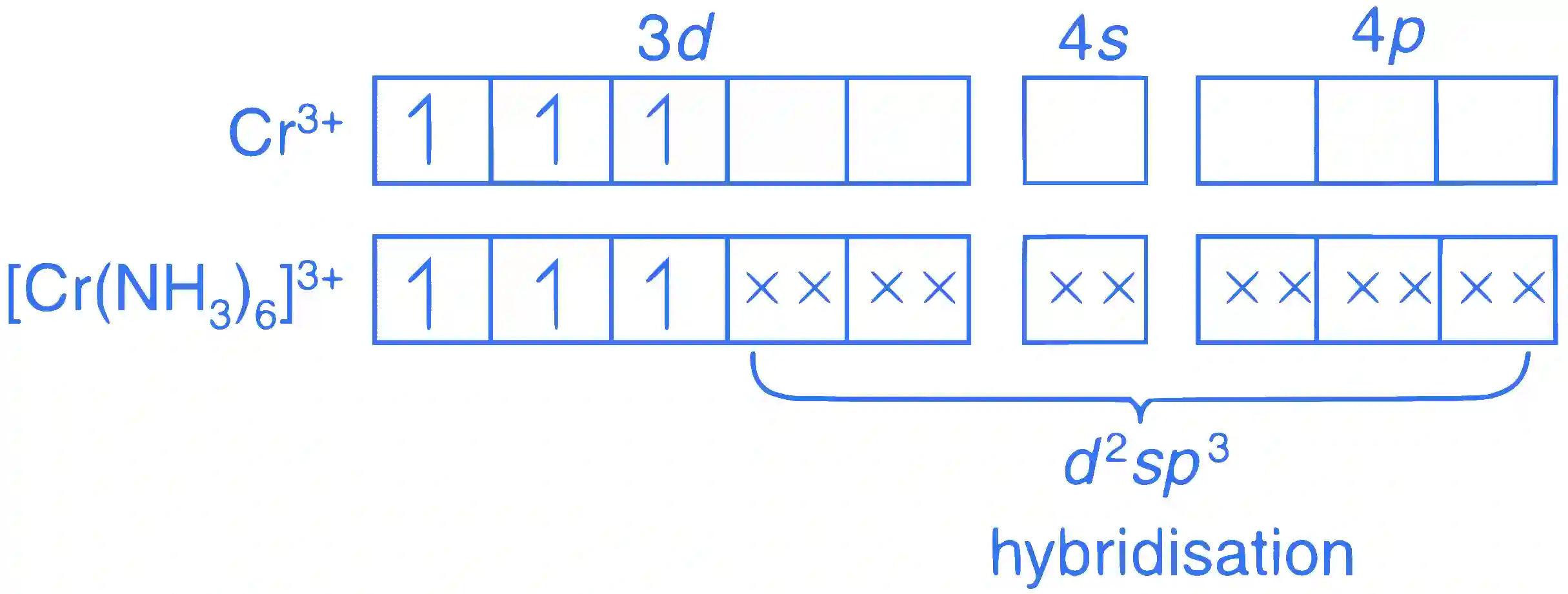
Electrons in orbitals remains paired as ammonia is a strong ligand. Two , one and three orbitals undergo hybridisation to form six hybrid orbitals. These orbitals accept lone pair of electrons from each of the six ammonia molecules.
4.
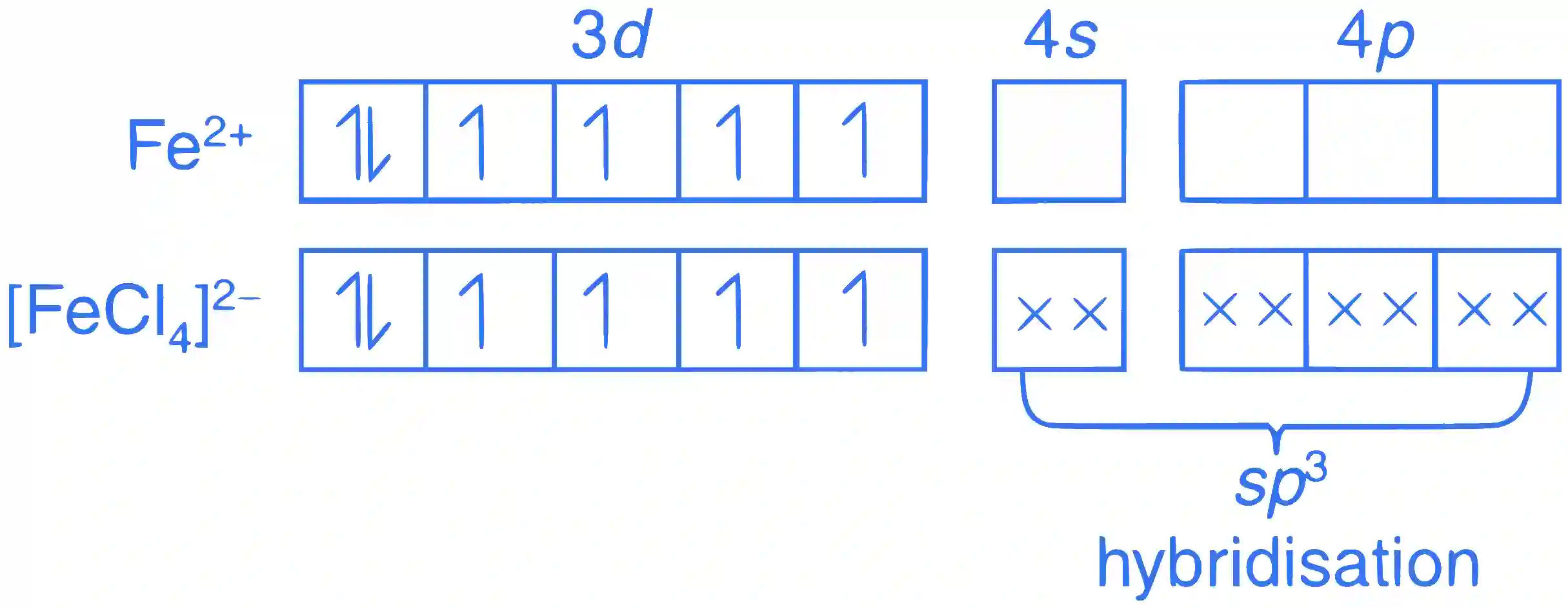
Electrons in orbitals remains unpaired as chlorine is a weak ligand. One and three orbitals undergo hybridization to form four hybrid orbitals. These hybrid orbitals accept lone pair of electrons from each of the chlorine ligand.
5. : The arrangement of electrons in will be
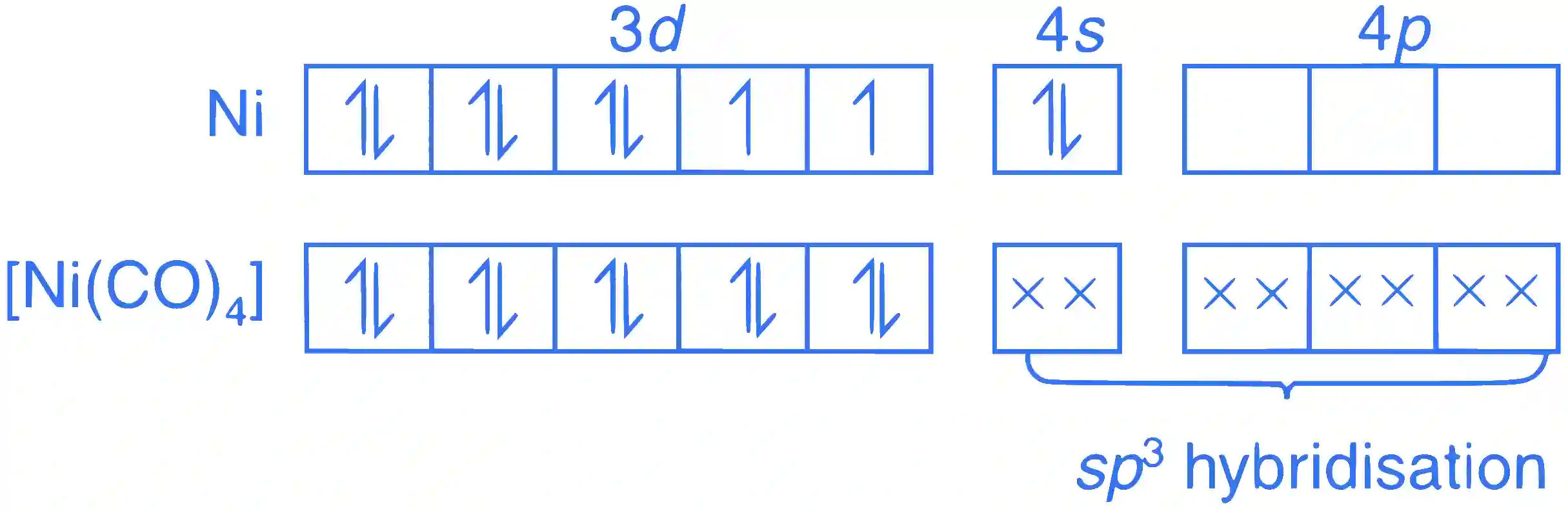
Electrons in orbitals remains paired and paired electron from orbital move to as carbonyl is a strong ligand. One , and three orbitals undergo hybridisation to form four hybrid orbitals. These hybrid orbitals accept lone pairs from each of the four carbonyl ligand.
6. The arrangement of electrons in will be
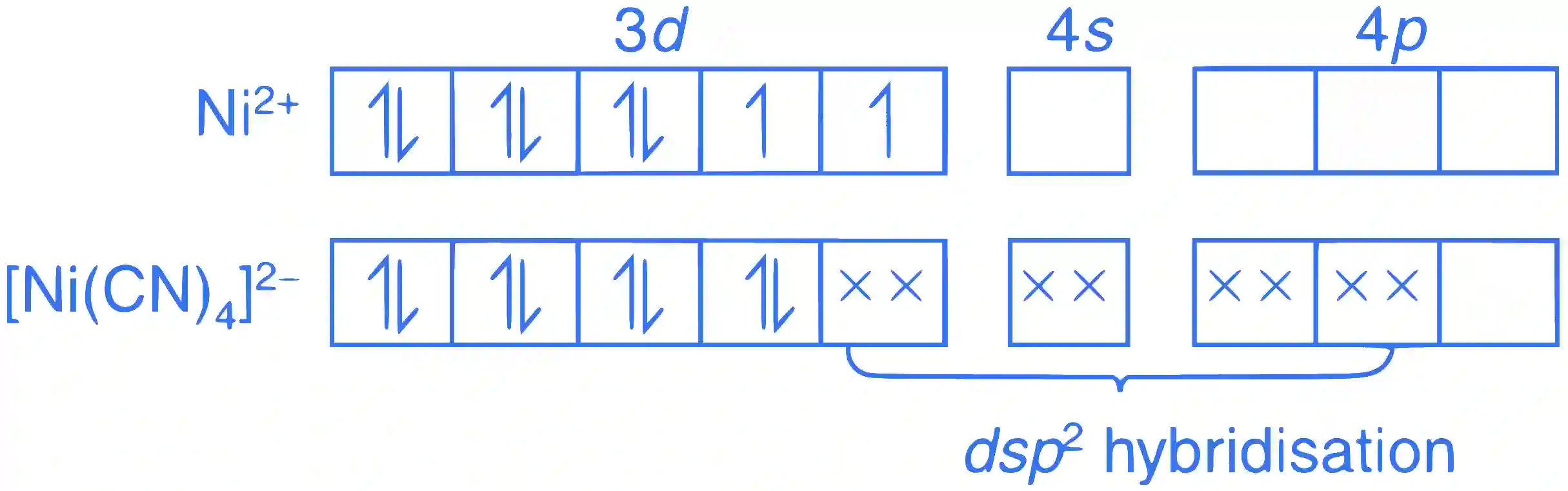
Electrons in orbitals pair up as cyanide is a strong ligand. One , one and two orbitals undergo hybridisation to form four hybrid orbitals. The hybrid orbitals accept lone pair of electrons from each of the cyanide ligand.