QJEEAdv17Ph7909: JEE Advanced 2017 Physics - Class 12 JEEAdv17Ph7909 Solution: A source of constant voltage V is connected to a resistance R…
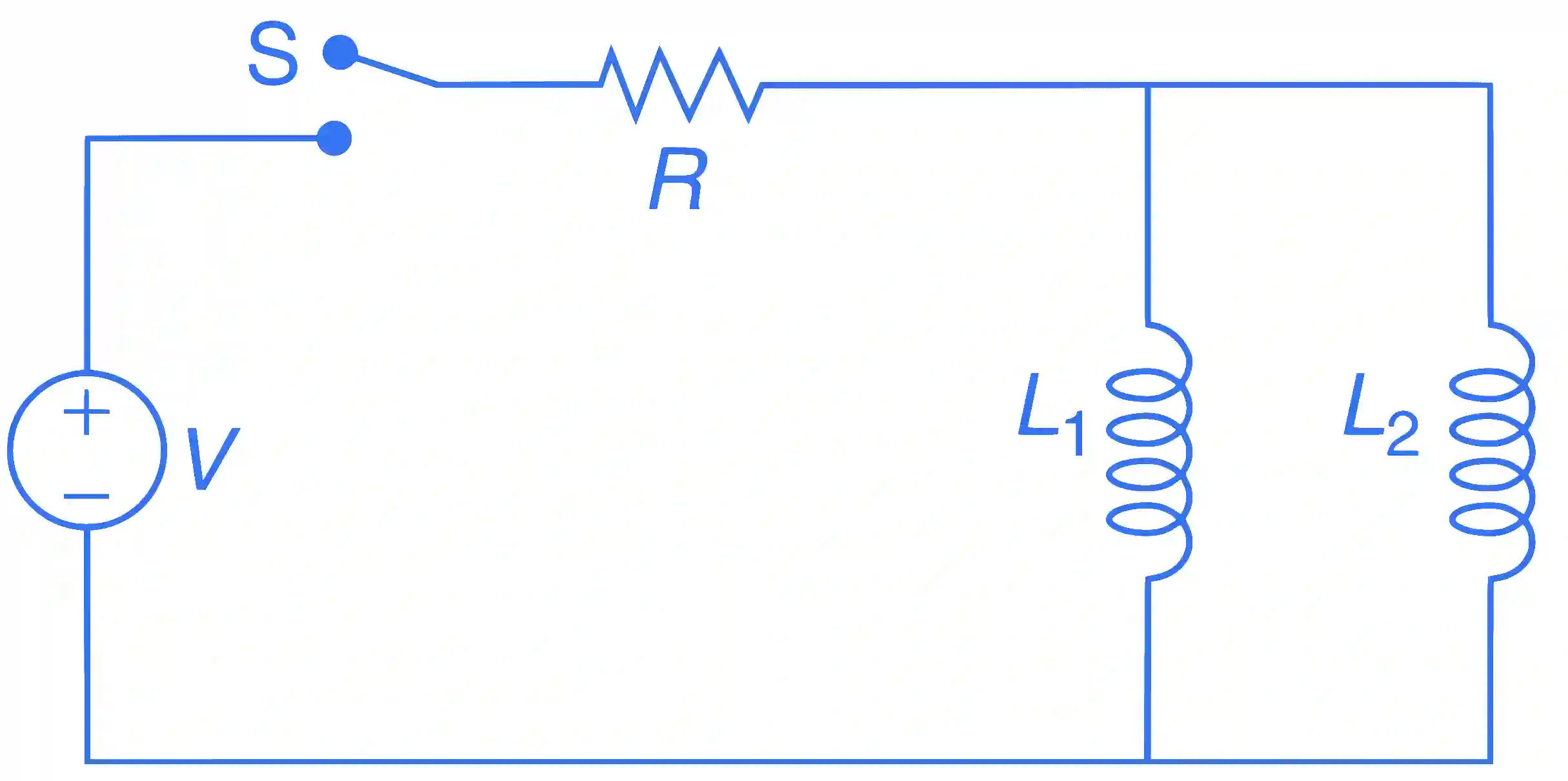
Multiple Choice Options
- A After a long time, the current through L1 will be VRL2L1+L2
- B After a long time, the current through L2 will be VRL1L1+L2
- C The ratio of the currents through L1 and L2 is fixed at all times (t > 0)
- D At t = 0, the current through the resistance R is VR
Step-by-Step Verified Solution
Let i1 be the current through L1, i2 be the current through L2 and i be the current through R.
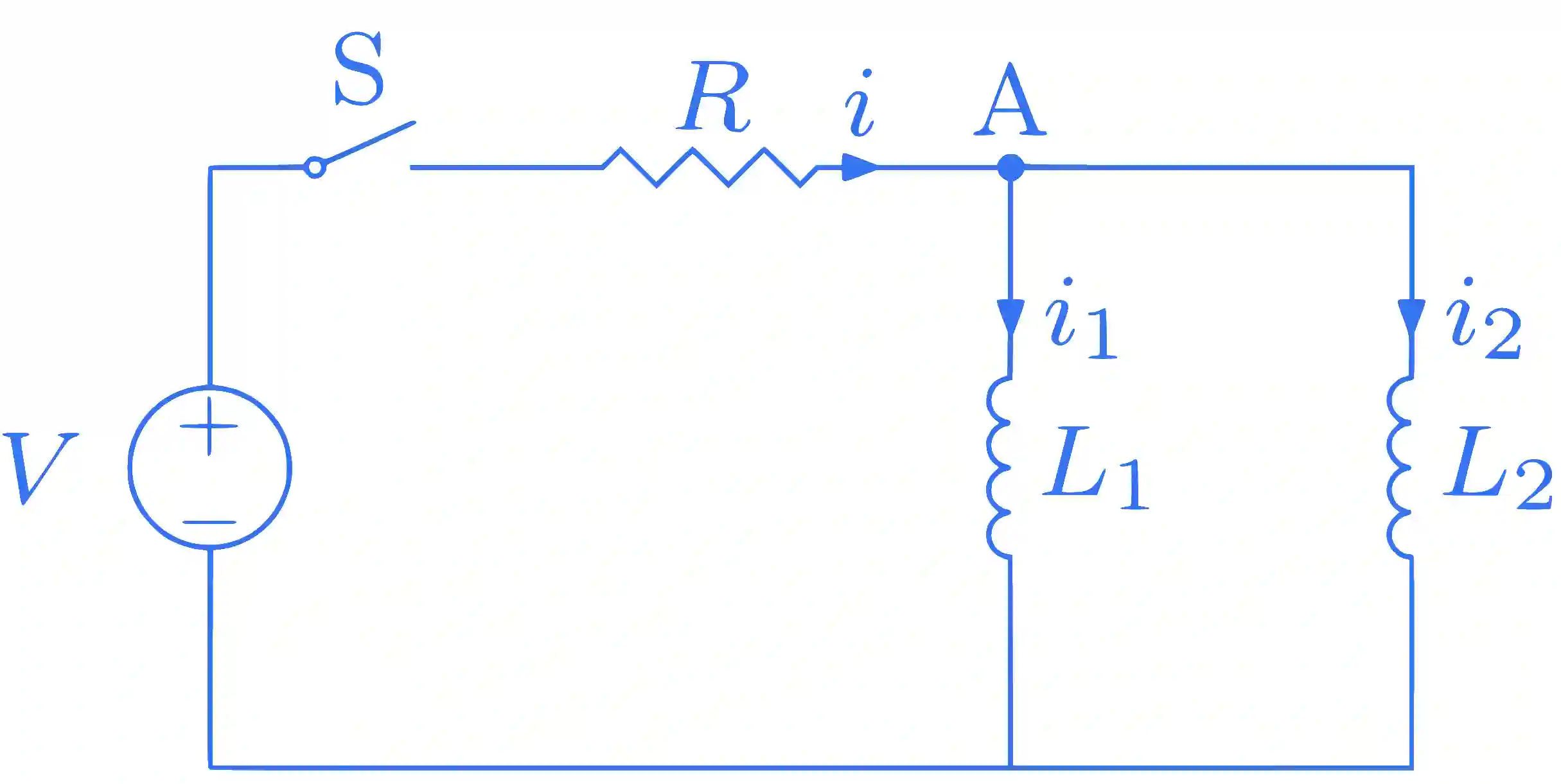
The inductors and are connected in parallel. Therefore, the self-induced emf in and are equal, which can be expressed as:
Upon integrating this equation, we get :
............(1)
This indicates that the ratio of the currents through and is constant.
Using Kirchhoff's current law at junction A, we have :
.............(2)
At the moment the switch is closed (t = 0), the inductors act as open circuits (since the inductive reactance approaches infinity as ). Therefore, initially :
and the current through the resistor is :
After a long time, the inductive reactance of the inductors becomes zero. Applying Kirchhoff's loop law, the current through the resistor is :
Substituting into equation (2) and solving equations (1) and (2), we find :