QJEEAdv16Phe271: JEE Advanced 2016 Physics - Class 12 JEEAdv16Phe271 Solution: Consider two identical galvanometers and two identical…
Multiple Choice Options
- A The maximum voltage range is obtained when all the components are connected in series
- B The maximum voltage range is obtained when the two resistors and one galvanometer are connected in series, and the second galvanometer is connected in parallel to the first galvanometer
- C The maximum current range is obtained when all the components are connected in parallel
- D The maximum current range is obtained when the two galvanometers are connected in series, and the combination is connected in parallel with both the resistors
Step-by-Step Verified Solution
Let ig be the current that gives full deflection of the galvanometer. When all components are connected in series (see figure), effective resistance of the circuit is and maximum current allowed in the circuit is ig.
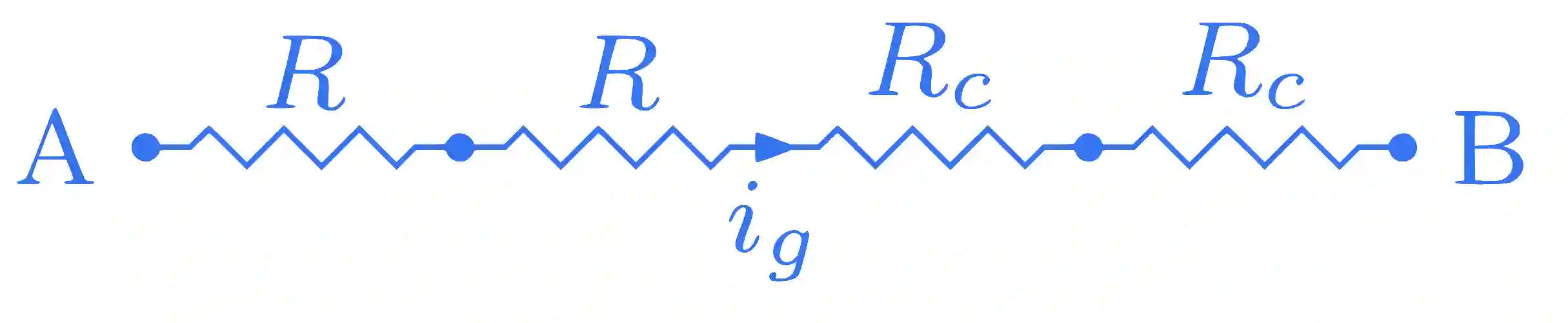
Thus, the voltage between A and B is
.
Consider the case when two resistors and one galvanometer are connected in series and the second galvanometer is connected in parallel.
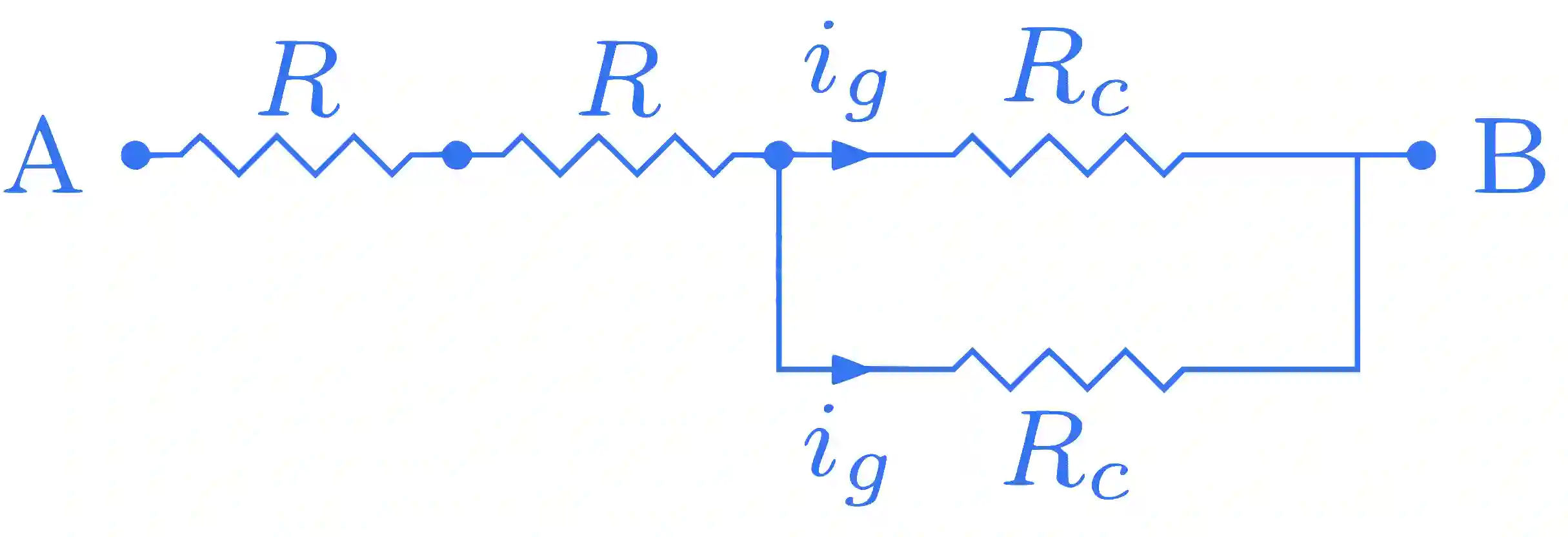
The maximum current through each galvanometer is ig and the maximum current through the resistors is 2ig. Apply Kirchhoff's law to get the voltage between A and B as
> {V_{AB}} ( {R_c} < R/2 ).
Consider the case when all four components are connected in parallel.
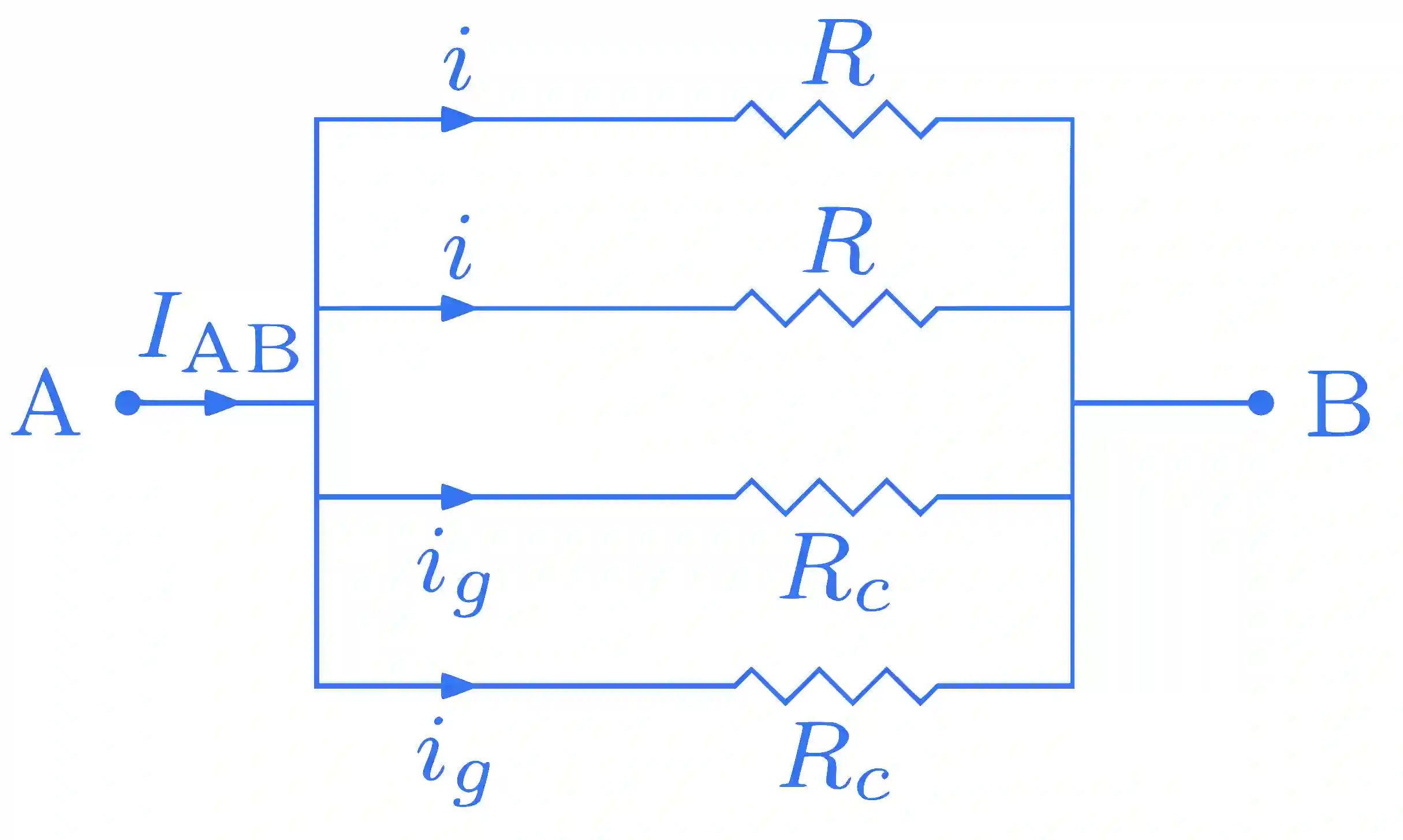
Let i and ig be the currents through the resistors and the galvanometers. By Kirchhoff's law, , which gives . The current between A and B is
.
Consider the case when the two galvanometers are connected in series and the combination is connected in parallel with both the resistors.
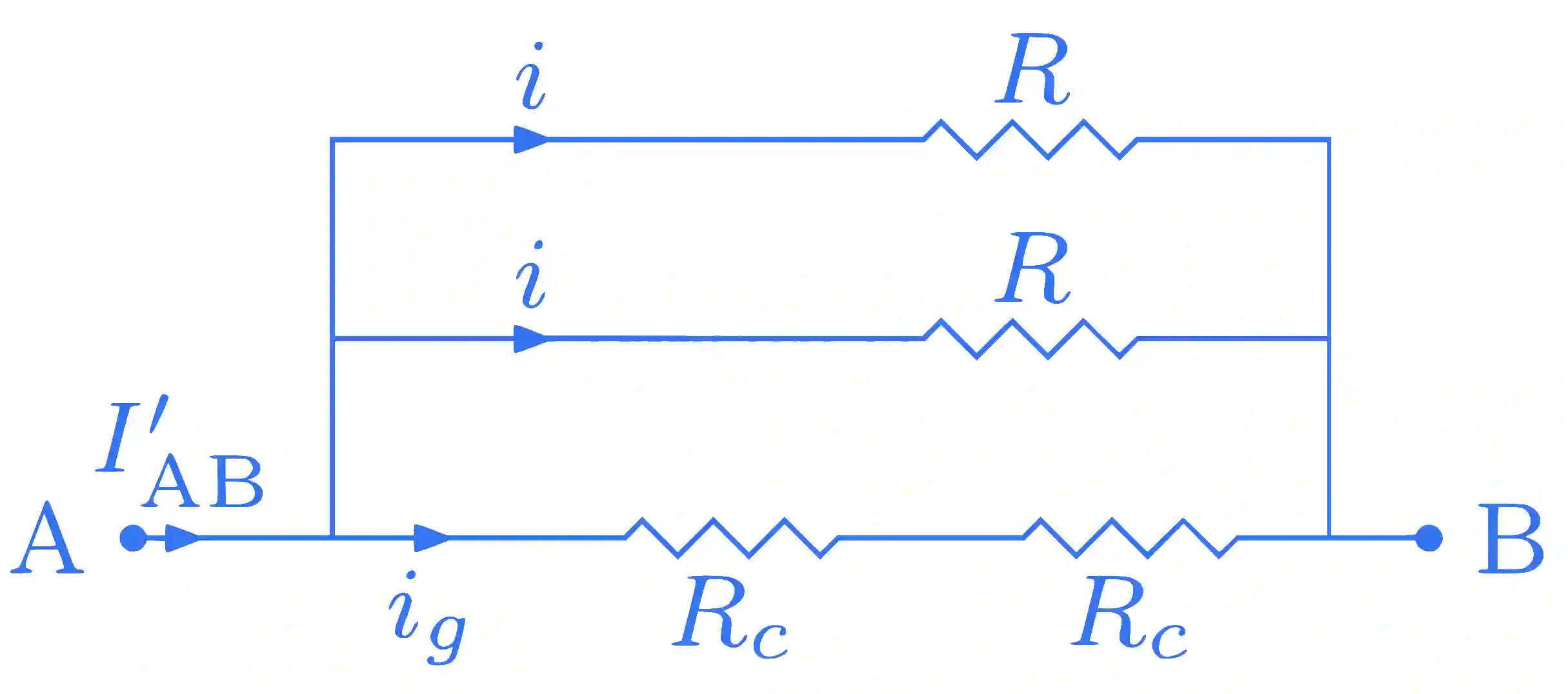
< {I_{AB}} ( {R_c} < R/2 ).