QJEEAdv16Ph19cc: JEE Advanced 2016 Physics - Class 11 JEEAdv16Ph19cc Solution: Two thin circular discs of mass m and 4m, having radii of a and …
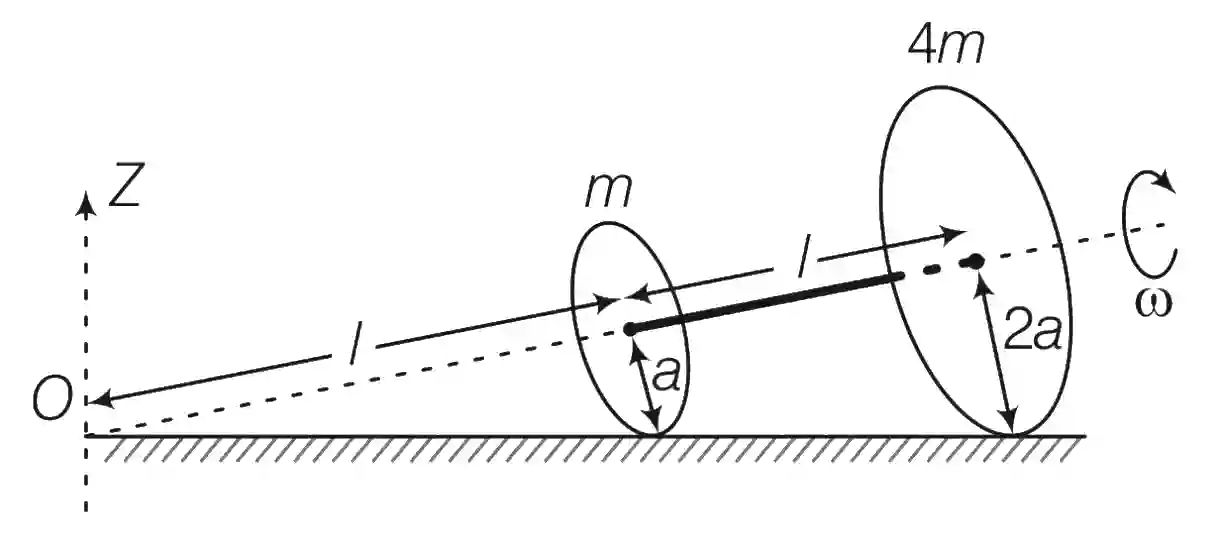
Two thin circular discs of mass m and 4m, having radii of a and 2a, respectively, are rigidly fixed by a massless, rigid rod of length l=24a through their centers. This assembly is laid on a firm and flat surface, and set rolling without slipping on the surface so that the angular speed about the axis of the rod is ω. The angular momentum of the entire assembly about the point ‘O’ is L (see the figure). Which of the following statement(s) is(are) true?
Multiple Choice Options
AThe center of mass of the assembly rotates about the z-axis with an angular speed of 5ω
BThe magnitude of angular momentum of center of mass of the assembly about the point O is 81ma2ω
CThe magnitude of angular momentum of the assembly about its center of mass is 217ma2ω
DThe magnitude of the z-component of L is 55ma2ω
Step-by-Step Verified Solution
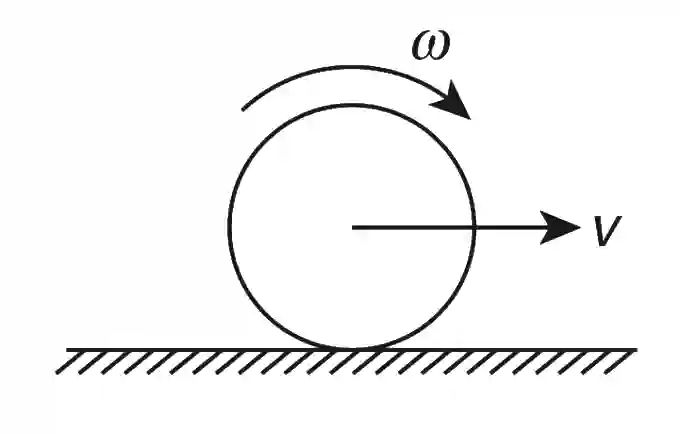
The following figure depicts the rolling condition of a circular disc:
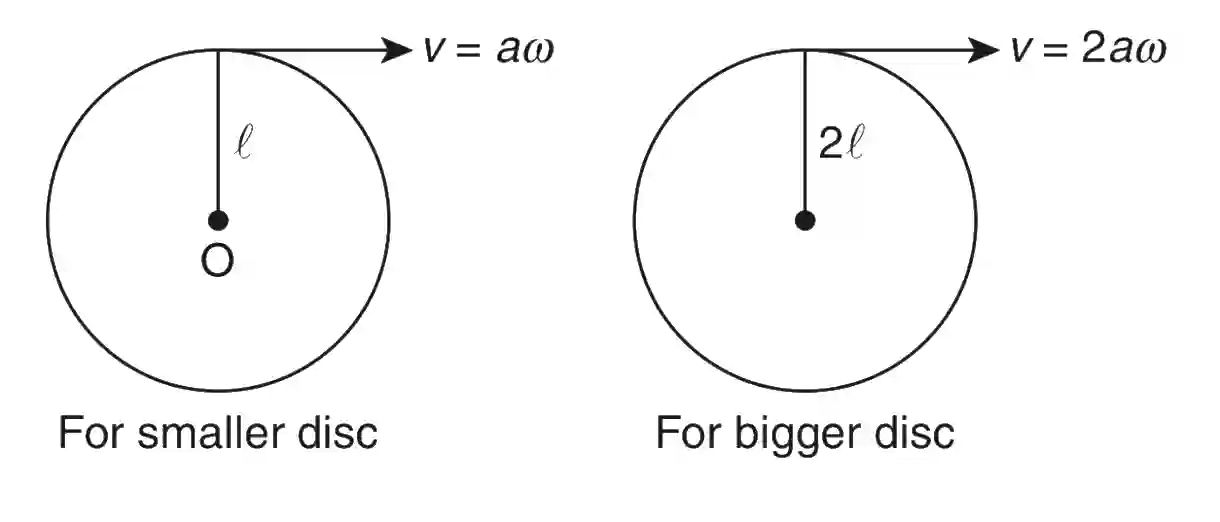
For the smaller disc, we have the velocity expressed as
v = aω
For the bigger disc, we have the velocity expressed as
v = (2a)ω = 2aω
Now, let us consider that both discs roll and also rotate about point O.
∙ The angular momentum of a rotating body is given by
L=r×p
About point O, the combined angular momentum of the discs is given by
L = lmaω + 2l(4m)(2aω)
where lmaω is due to the smaller disc and 2l(4m) (2aω) is due to the bigger disc.
Now, substituting the values in Eq. (1), we get
L=ma2ω[24+1624]
=ma2ω(346)≈83ma2ω
Hence, option (B) is incorrect.
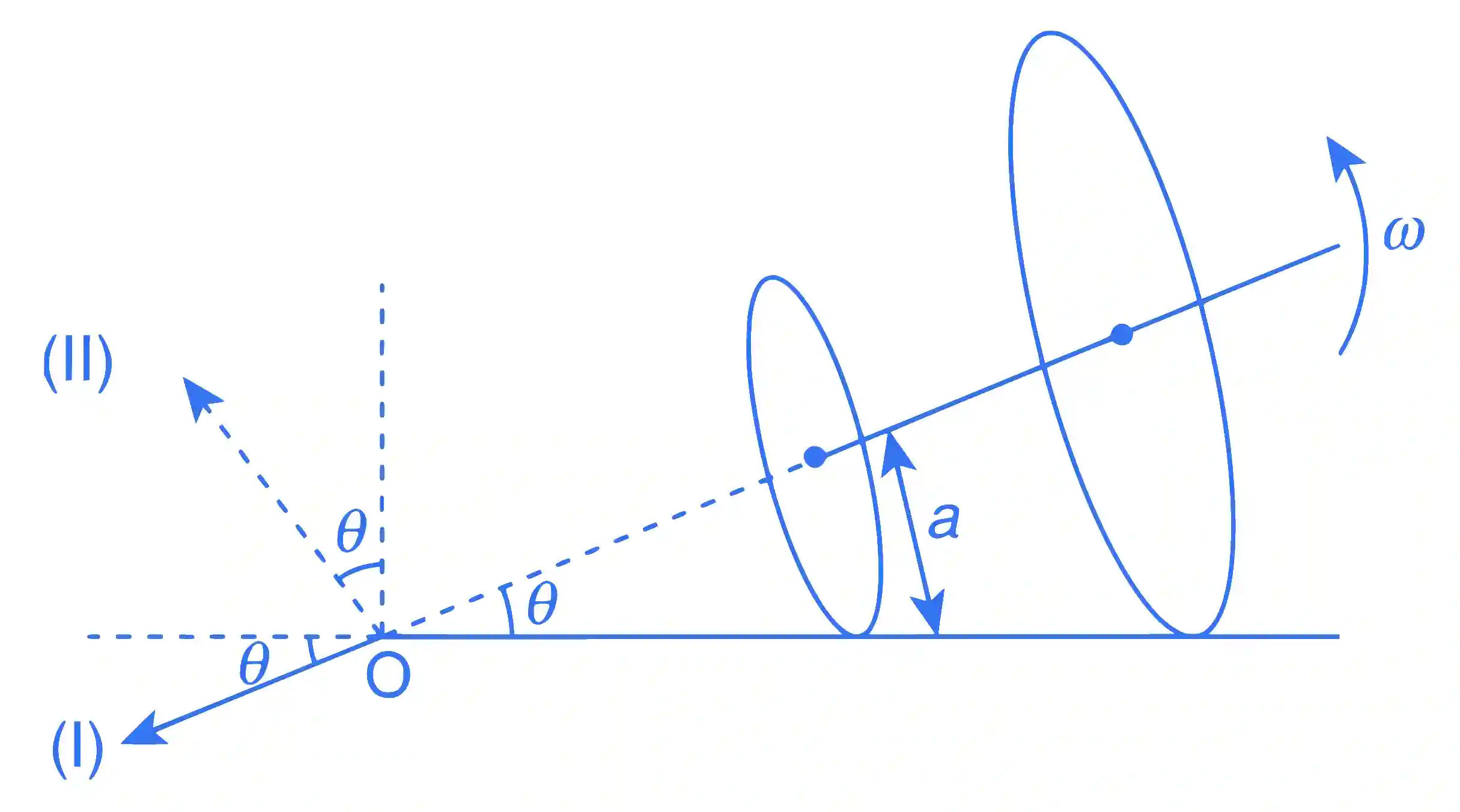
∙ Now, let us consider that z-component of L :
L=Lcosθ
=346ma2ω[l2+a21]=346ma2ω(624)
= 81 ma2ω
Hence, option (D) is incorrect.
∙ The centre of mass of the assembly about its centre of mass [i.e. the axis lavelled as (I) in the figure shown here] is
L(I)=2ma2ω+24m(2a)2ω=217ma2ω
Hence, option (C) is correct.
∙ About z-axis, the centre of mass of the assembly rotates with an angular speed